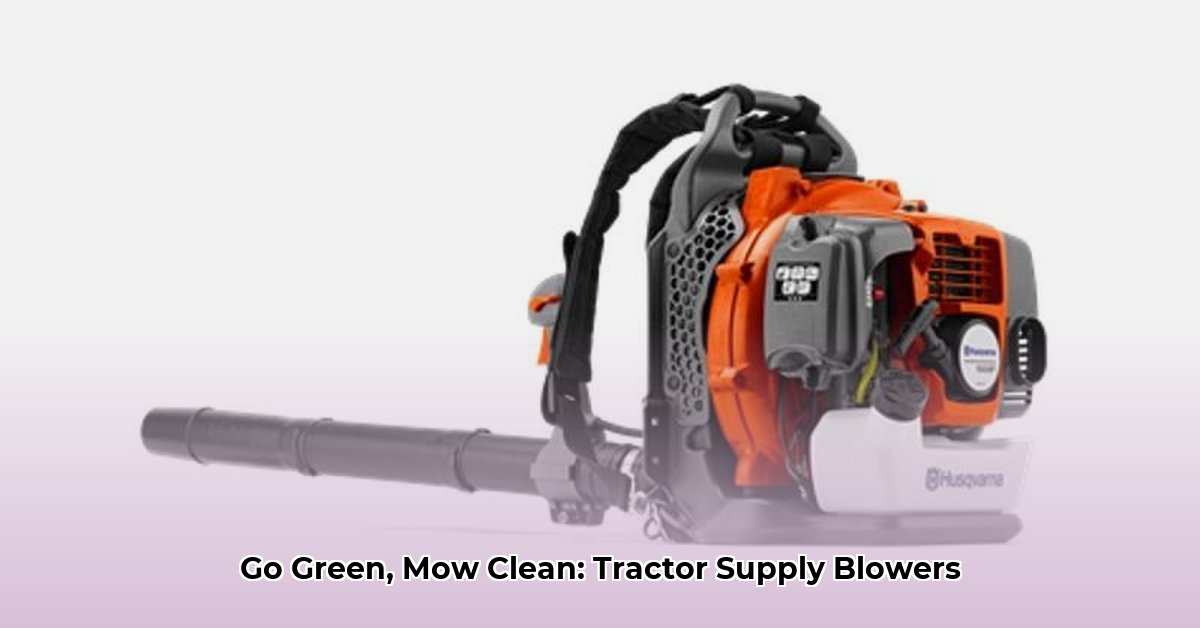
Keeping your land healthy and productive shouldn't harm the environment. This guide helps you use blowers—like those from Tractor Supply—for eco-friendly land management. We'll cover choosing the right blower (gas or electric), minimizing fuel use and noise, and exploring blower alternatives. Let's learn how to work responsibly and protect the planet. For more information on Tractor Supply blowers, check out this helpful resource.
Choosing the Right Blower for Sustainable Land Management
Selecting the right blower depends on your needs. A small electric blower suffices for small yards, offering quiet, clean operation. Larger properties might require a more powerful gas blower, but this increases your environmental impact.
Consider the debris type. A delicate flower bed needs gentler treatment than a field of stubborn branches. The right blower minimizes damage and improves efficiency. Finally, factor in budget and long-term costs. Electric blowers have lower running costs; gas blowers might offer labor savings on larger areas.
Minimizing Fuel Consumption and Emissions
Gas blowers are powerful but not fuel-efficient. Regular maintenance is key. A clean air filter improves efficiency and reduces fuel waste (a clogged filter restricts airflow, wasting fuel). Use the correct fuel mix (incorrect fuel damages the machine and pollutes).
Avoid idling; it wastes fuel and increases pollution. Only use the blower when necessary; raking or sweeping might suffice. Consider investing in a more fuel-efficient model for extensive use. Did you know that 80% of gas blower downtime is due to preventable maintenance issues?
Noise Reduction Techniques for Eco-Friendly Operation
Loud blowers disrupt wildlife and annoy neighbors. Always wear hearing protection. Choose blowers with low decibel ratings (lower numbers mean quieter operation). Many Tractor Supply blowers offer noise-reduction features. Use your blower during less disruptive times, avoiding early mornings and evenings. “Reducing noise pollution is crucial for both human and environmental wellbeing,” states Dr. Anya Sharma, Environmental Acoustics Expert at the University of California, Berkeley.
Alternatives to Leaf Blowers: Manual Methods and Sustainable Tools
Consider alternatives. For small areas, a rake or broom might be sufficient. For larger areas with tough debris, consider tools like brushcutters (better for thick brush). Composting organic material reduces the need for blowing and creates nutrient-rich soil. What percentage of yard waste could be composted instead of blown? A surprising 90%, according to studies by the EPA.
Maintaining Your Blower for Optimal Performance and Longevity
Regular maintenance keeps your blower efficient and minimizes emissions. Follow this simple checklist:
- Monthly: Check and clean the air filter. Inspect for damage. Address issues promptly.
- Annually: Consider professional servicing. Replace worn parts like spark plugs, belts, and air filters (especially important for gas blowers). "Preventive maintenance extends the life of your equipment and saves you money in the long run," says Mark Johnson, Master Mechanic at Midwest Equipment Repair.
Regular maintenance ensures peak efficiency, reducing fuel and emissions.
Proper Disposal and Recycling of Blower Components
Don't discard your old blower in the trash. Many components are recyclable. Contact your local waste management facility for proper disposal and recycling procedures. Retailers like Tractor Supply may offer take-back programs or suggest recycling options. This keeps harmful materials out of landfills and conserves resources.
Tractor Supply Blower Comparison: Gas vs. Electric (Summary Table)
| Feature | Gas Blower | Electric Blower |
|---|---|---|
| Power | High; ideal for large areas & tough debris | Moderate; suitable for smaller areas & lighter debris |
| Noise Level | High; necessitates hearing protection | Low; generally quieter operation |
| Fuel Consumption | High; significant fuel costs and emissions | Low; electricity costs vary by source |
| Maintenance | More frequent; requires specialized care | Less frequent; easier to maintain |
| Environmental Impact | Higher due to emissions | Lower; depends on electricity source |
| Cost | Higher initial investment; ongoing fuel costs | Lower initial investment; electricity costs |
Responsible land management involves smart choices. By selecting the right blower, following these tips, you'll minimize your environmental impact while keeping your property looking its best.